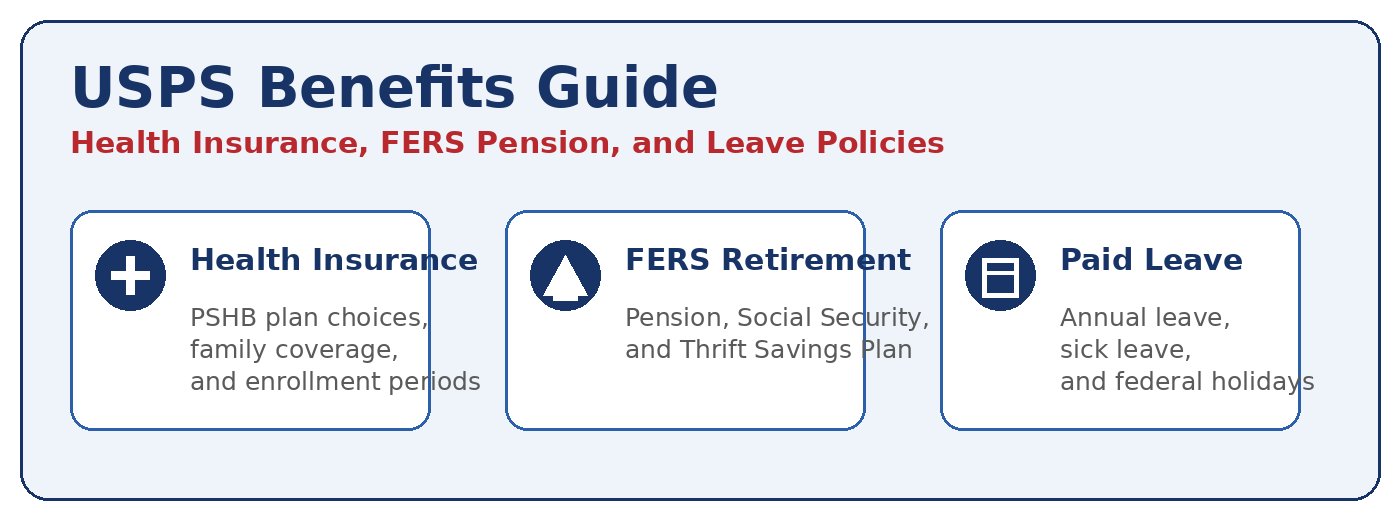
Why USPS Benefits Matter
USPS compensation includes more than an hourly wage. Eligible career employees receive access to health coverage, retirement programs, paid leave, life insurance, and other federal-style benefits. These benefits often become a major reason employees stay in postal careers for the long term.
Benefit eligibility differs by appointment type. Career employees generally receive the broadest package. Noncareer employees, including many assistants and seasonal workers, may receive a different set of benefits under current policies or collective bargaining agreements. Always review the specific posting and employment offer before relying on a benefit.
Postal Service Health Benefits Program
USPS employees and annuitants use the Postal Service Health Benefits Program, commonly called PSHB. The program began in 2025 and replaced Federal Employees Health Benefits coverage for eligible postal workers and retirees. It offers multiple plans with different premiums, provider networks, deductibles, prescription coverage, and out-of-pocket limits.
- Self Only coverage for one eligible employee.
- Self Plus One coverage for the employee and one eligible family member.
- Self and Family coverage for the employee and eligible family members.
Your best plan depends on your location, preferred doctors, expected medical needs, prescriptions, and monthly premium. Review plan brochures rather than choosing by premium alone. A lower premium may come with a higher deductible or a smaller provider network.
Applicants exploring post office jobs should check whether the position is career or noncareer. This detail affects when health coverage starts, which plan options apply, and how much USPS contributes toward premiums.
Dental, Vision, Life Insurance, and Flexible Spending Accounts
Career employees may also qualify for dental and vision plans, federal employee group life insurance, and flexible spending accounts. A health care flexible spending account lets eligible employees set aside pre-tax money for qualified medical costs. A dependent care account may help cover eligible child care or dependent care expenses.
Enrollment deadlines matter. New employees often receive a limited window to elect benefits. Open Season provides another opportunity to review or change many benefit selections each year. Missing a deadline may require waiting for the next eligible enrollment period unless a qualifying life event occurs.
How the FERS Retirement System Works
Most eligible career postal employees participate in the Federal Employees Retirement System, or FERS. FERS is built around three parts:
- A basic defined-benefit pension based on service, retirement age, and high-3 average salary.
- Social Security benefits earned through payroll contributions.
- The Thrift Savings Plan, a workplace retirement account similar to a private-sector 401(k).
The basic pension is not based only on the balance in an investment account. It uses a formula tied to years of creditable service and the employee’s highest average basic pay over three consecutive years. Employees must meet age and service requirements before receiving an immediate unreduced retirement benefit.
A Postal Mail Handler Assistant role may begin as a noncareer appointment. Applicants should confirm whether the position provides a pathway to career status, because FERS pension participation normally relates to eligible career employment.
Thrift Savings Plan Contributions and Matching
The Thrift Savings Plan lets eligible employees contribute part of each paycheck to traditional or Roth accounts. USPS contributions and matching may help employees build retirement savings faster. Employees who contribute enough to receive the full available match avoid leaving employer-provided retirement money unused.
Traditional contributions generally reduce current taxable income, while qualified Roth withdrawals may be tax-free in retirement. Your choice should reflect your tax situation, time horizon, and retirement plan. Investment values rise and fall, so employees should review fund choices and avoid treating short-term market movement as a reason to stop long-term saving.
Annual Leave: Paid Vacation Time
Career employees earn annual leave based on years of creditable service. USPS states that full-time career employees generally earn 13 days per year during their first three years, 20 days per year after three years, and 26 days per year after fifteen years. Part-time employees earn leave on a prorated basis.
Annual leave supports vacations, personal appointments, family needs, and other approved absences. Employees request leave through established workplace procedures. Approval depends on staffing, operational needs, local scheduling rules, and applicable labor agreements.
When reviewing post office job hiring listings, compare the appointment type and expected schedule. A job with strong benefits may still involve rotating shifts, weekends, holidays, overtime, or changing start times.
Sick Leave and Medical Absences
Eligible career employees earn paid sick leave for personal illness, medical appointments, injury, pregnancy-related needs, and certain family-care situations. Unused sick leave may accumulate without the annual limits that often apply to vacation leave.
Employees must follow call-in, documentation, and attendance procedures. Supervisors may request medical documentation when policy allows. Sick leave protects income during legitimate medical absences, but repeated unscheduled attendance issues may still affect employment when they do not meet policy requirements.
Federal Holidays and Other Time-Off Policies
USPS observes federal holidays, but postal operations do not stop everywhere. Processing plants, transportation operations, and certain delivery functions may still require employees to work. Holiday pay, premium pay, or scheduling rules depend on the employee’s position, status, and applicable agreement.
Other leave categories may include family and medical leave, military leave, court leave, bereavement-related leave, and leave without pay. Eligibility and documentation requirements differ, so employees should use official workplace guidance for personal situations.
Benefits for Noncareer Employees
Noncareer positions may offer valuable experience and a route into career employment, but their benefit package is often more limited. Some noncareer employees receive health plan access, paid leave, holiday-related benefits, or other negotiated benefits. The exact package varies by employee category and labor agreement.
Broad job platforms that advertise roles as hiring immediately may include postal and nonpostal employers. Read the employer name, appointment type, fees, application instructions, and benefit language carefully before submitting personal information.
How to Compare a USPS Job Offer
- Confirm whether the appointment is career, noncareer, temporary, seasonal, full-time, or part-time.
- Review the hourly rate, overtime rules, premium pay, and expected weekly schedule.
- Ask when health coverage, retirement participation, and leave earning begin.
- Check whether the position requires a driving record review, physical work, lifting, outdoor duties, or flexible availability.
- Read the written offer and benefit materials before making financial decisions.
External Retirement Reference
For a plain-language explanation of the three-part federal retirement structure, review Investopedia’s Federal Employees Retirement System overview. It explains the basic pension, Social Security, and Thrift Savings Plan components without using Indeed.
Frequently Asked Questions
Do all USPS employees receive the same benefits?
No. Benefits depend on appointment type, career status, work schedule, union agreement, and eligibility rules. Career employees generally receive the broadest package.
What health insurance program covers postal employees?
Eligible postal employees and annuitants use the Postal Service Health Benefits Program. Plan availability and premiums depend on location and enrollment category.
Does USPS offer a pension?
Eligible career employees generally participate in FERS, which includes a basic pension, Social Security, and the Thrift Savings Plan.
How much annual leave do career employees earn?
Full-time career employees generally earn 13 days per year during their first three years, 20 days after three years, and 26 days after fifteen years. Rules may differ for part-time schedules.
Does unused sick leave expire each year?
Career sick leave generally accumulates from year to year. Employees should review current USPS rules for how unused sick leave affects retirement service credit.
Do Mail Handler Assistants receive FERS immediately?
Mail Handler Assistant positions are commonly noncareer roles. FERS participation normally begins after conversion or appointment to an eligible career position.
Can USPS employees work on federal holidays?
Yes. Postal operations may require work on holidays. Pay and scheduling depend on the position, employee status, and applicable agreement.
When should a new employee enroll in benefits?
Complete enrollment within the deadline shown in the official onboarding materials. Missing the new-hire window may delay coverage until Open Season or a qualifying life event.
Final Thoughts
USPS benefits can provide long-term value through health coverage, paid leave, retirement income, and employer-supported savings. The strongest package usually applies to eligible career employees, while noncareer roles may provide fewer benefits or a pathway toward career status. Review every posting carefully, confirm eligibility in writing, and compare the full compensation package rather than focusing only on the starting wage.